
HVAC Maintenance Services in Dallas
In Dallas, HVAC maintenance isn't just a suggestion; it’s a critical defense against a climate that pushes your system to its limits. The direct answer is that consistent, professional maintenance is...
Need Help? Call Now for Free Estimate
Speak with a local expert today
In Dallas, HVAC maintenance isn't just a suggestion; it’s a critical defense against a climate that pushes your system to its limits. The direct answer is that consistent, professional maintenance is the single most effective way to prevent catastrophic summer breakdowns, manage soaring energy bills, and extend the lifespan of your most vital home comfort system. Without it, the combination of our intense heat, humidity, and dusty conditions can lead to efficiency losses of 20% or more, drastically increasing wear and tear and the likelihood of a costly emergency repair during a heatwave.
Why Dallas Presents a Unique Challenge for Your HVAC System
To understand why maintenance here is non-negotiable, you have to appreciate the specific demands our environment places on air conditioning. Dallas operates in a state of thermal extremes. We endure long, punishing summers where temperatures consistently hover in the high 90s and triple digits for months, demanding near-constant operation from your AC. This isn't a system that cycles on for a few hours a day; from June through September, it’s running a marathon, and often at a sprint.
However, the heat is only part of the equation. Our humidity levels, particularly during spring and early summer storms, add a massive latent load. Your system must work exponentially harder not just to cool the air, but to wring the moisture out of it. When coils are dirty or refrigerant levels are off—common issues that develop over time—the system’s ability to dehumidify plummets. You might feel cool air, but your home will feel clammy and uncomfortable, a telltale sign of an overtaxed or poorly maintained unit.
Then there’s the particulate matter. Dallas isn't just hot; it's dusty. Pollen in the spring gives way to fine dust and pollution that settles on everything, including the intricate fins of your condenser coil outside and the evaporator coil inside. This layer of grime acts like an insulating blanket, forcing the system to run longer and harder to achieve the same cooling effect. It’s akin to trying to breathe through a cloth; the system struggles, energy consumption soars, and components overheat. This is the daily reality your HVAC faces, and it’s precisely what a Dallas-specific maintenance visit is designed to combat.
The Anatomy of a Professional Dallas HVAC Maintenance Visit
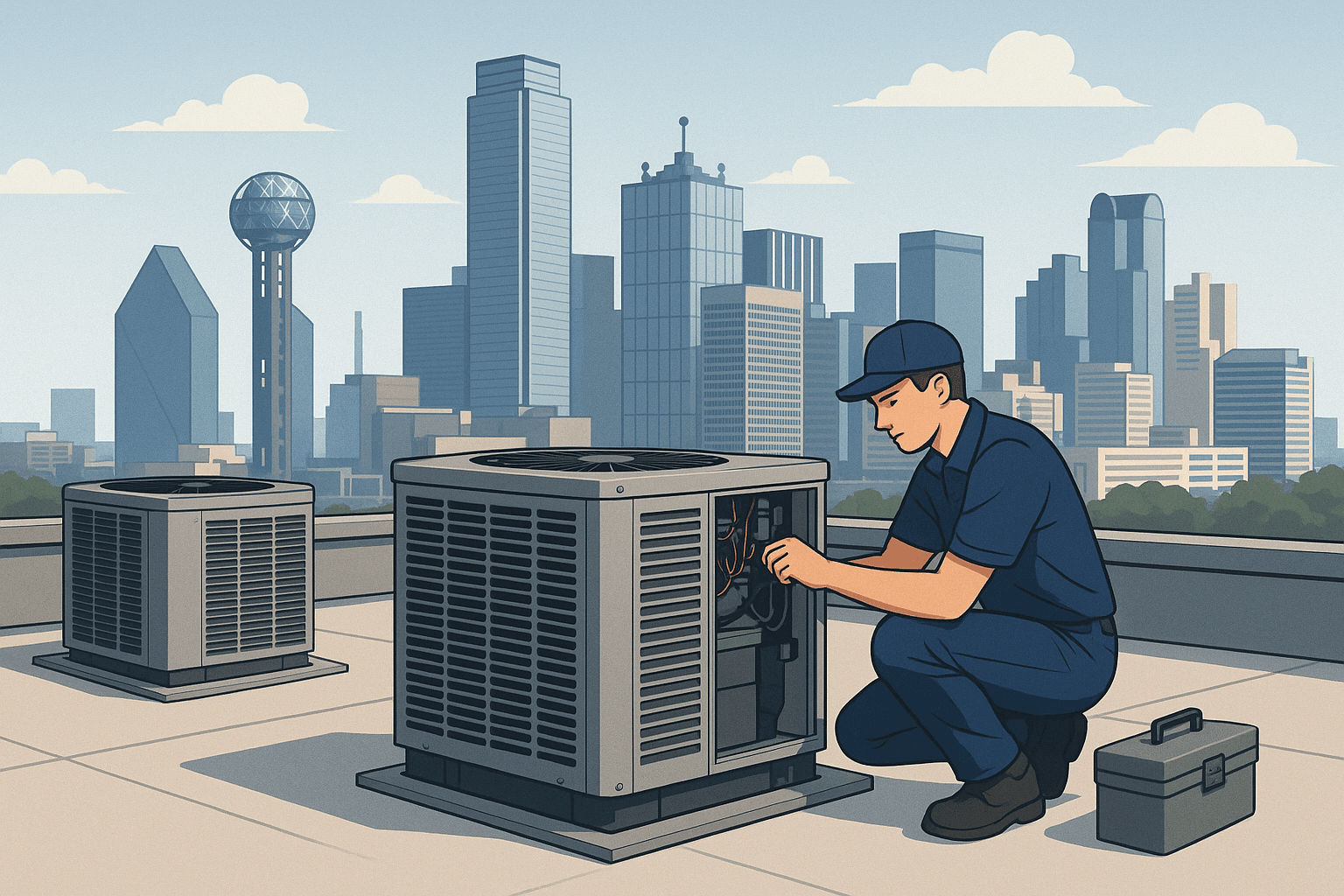
So, what exactly are you paying for when you schedule a professional tune-up? It’s far more than a quick filter change. A comprehensive maintenance visit is a systematic health check and performance optimization, tailored to our local conditions. A qualified technician approaches your system as a interconnected mechanical system, checking each component for signs of stress that are precursors to failure.
The process begins with electrical diagnostics. They’ll check capacitors, which are like the starters for your motors; these commonly weaken under Dallas’s heat and can cause compressors and fan motors to fail. They’ll inspect contactors for pitting and wear, ensuring electrical connections are solid and not creating dangerous resistance points. Loose electrical connections are a frequent source of system failure and even fire risk, and the vibration from constant operation can loosen them over time.
The heart of the cooling process—the refrigerant circuit—gets meticulous attention. The technician will check refrigerant levels with precision gauges. Both undercharging and overcharging are detrimental; in our climate, incorrect charge can reduce efficiency by 10-20% and cause the compressor, the most expensive part of your system, to fail prematurely. They’ll also clean the condenser and evaporator coils thoroughly. This isn’t a casual spray-down; it’s a careful cleaning to remove the embedded layer of Dallas dust and pollen, restoring the coil’s ability to transfer heat efficiently.
Airflow is the lifeblood of the system. The tech will inspect the blower motor and wheel, clean them if necessary, and verify the system’s static pressure. They’ll check your ductwork for obvious leaks or restrictions, especially at plenums and registers. In many Dallas homes, ductwork in attics can suffer from torn seams due to heat degradation or pest intrusion, leaking precious cooled air into a 140-degree attic space before it ever reaches your living room. They’ll also calibrate your thermostat, check safety controls, and lubricate moving parts where applicable. The goal is to leave your system not just running, but running as it was engineered to: efficiently, safely, and reliably.
The Tangible Benefits: What Dallas Homeowners Actually Gain
The investment in maintenance pays dividends in several concrete ways, each more valuable during a Dallas summer. The most immediate benefit is sustained efficiency, which translates directly to your electricity bill. A clean, properly charged system can use up to 15% less energy than a neglected one. Over a four-month cooling season, that can mean hundreds of dollars in savings, often covering the cost of the maintenance visit itself.
Next is reliability, which is essentially peace of mind. The technician’s job is to find the small, inexpensive problems—a slightly frayed wire, a capacitor testing weak, a condensate drain starting to clog—before they become big, expensive, and inconvenient problems. Finding a failing capacitor on a pleasant spring day is a $150 repair. Having that same capacitor fail on a 105-degree Saturday in July is an emergency service call, a likely compressor overload, and a bill that can easily exceed $1,500. Maintenance shifts repairs from reactive emergencies to planned, manageable events.
Finally, there’s longevity. An HVAC system is a significant capital investment for your home. In Dallas, a well-maintained system can reliably reach 12-15 years or more. A neglected system, choked with dirt and straining against incorrect pressures, may fail in 8-10 years. That difference represents thousands of dollars in deferred capital replacement, not to mention the improved comfort and air quality a well-running system provides throughout its life.
What Happens When You Call for HVAC Maintenance in Dallas
When you reach out to schedule maintenance, the process is designed to be straightforward and informative. You’ll typically speak with a local coordinator who understands Dallas’s neighborhoods—from the historic homes in Lakewood to the newer developments in Frisco or Allen. They’ll ask a few key questions: the age and type of your system (gas furnace and AC, heat pump, etc.), any current concerns you have (like strange noises or rooms that don’t cool evenly), and your availability.
They will then schedule a two-hour window for a certified technician to arrive. You can expect upfront communication about the scope and typical cost of a maintenance visit, with the clear understanding that final pricing may be influenced by any unexpected issues found, which they will always discuss with you before any additional work is performed. On the day of the visit, the technician will perform the comprehensive inspection and cleaning detailed above. They should provide you with a written report of their findings, including photos of any issues, measurements of system performance (like temperature drop across the coil), and clear recommendations prioritized by urgency. This report becomes a valuable log of your system’s health over time.
Navigating the Dallas HVAC Landscape: A Note on Trust and Timing
Choosing a provider in a market as large as Dallas’s requires a focus on local trust. Look for companies that are long-standing members of the community, with clear Texas licenses (like a TACLB license) and full insurance. They should be familiar with the common architectural styles and system setups in your specific area, whether you’re in a mid-century modern in Preston Hollow or a new build in Prosper. The best time to schedule maintenance is during the shoulder seasons—spring (March-May) before the crushing heat arrives, and fall (September-November) before you need your heating system. However, a system check at any time is better than none at all.
Ultimately, HVAC maintenance in Dallas is an exercise in pragmatic homeownership. It’s the recognition that your air conditioner is your home’s primary defense against an aggressive climate. By investing in its care, you’re not just buying a service; you’re buying efficiency, reliability, longevity, and the profound comfort of knowing that when the next heatwave bears down on North Texas, your home will remain a cool, quiet refuge.
Is your Dallas home ready for the summer? Schedule a professional HVAC health check today.
