
Best Hurricane Impact Door Companies (2026)
The best hurricane impact door companies in 2026 — PGT, CGI, Andersen, Pella, ETO Doors, and Therma-Tru — compared by strength, wind-zone approval, and price, plus what to verify before you buy.
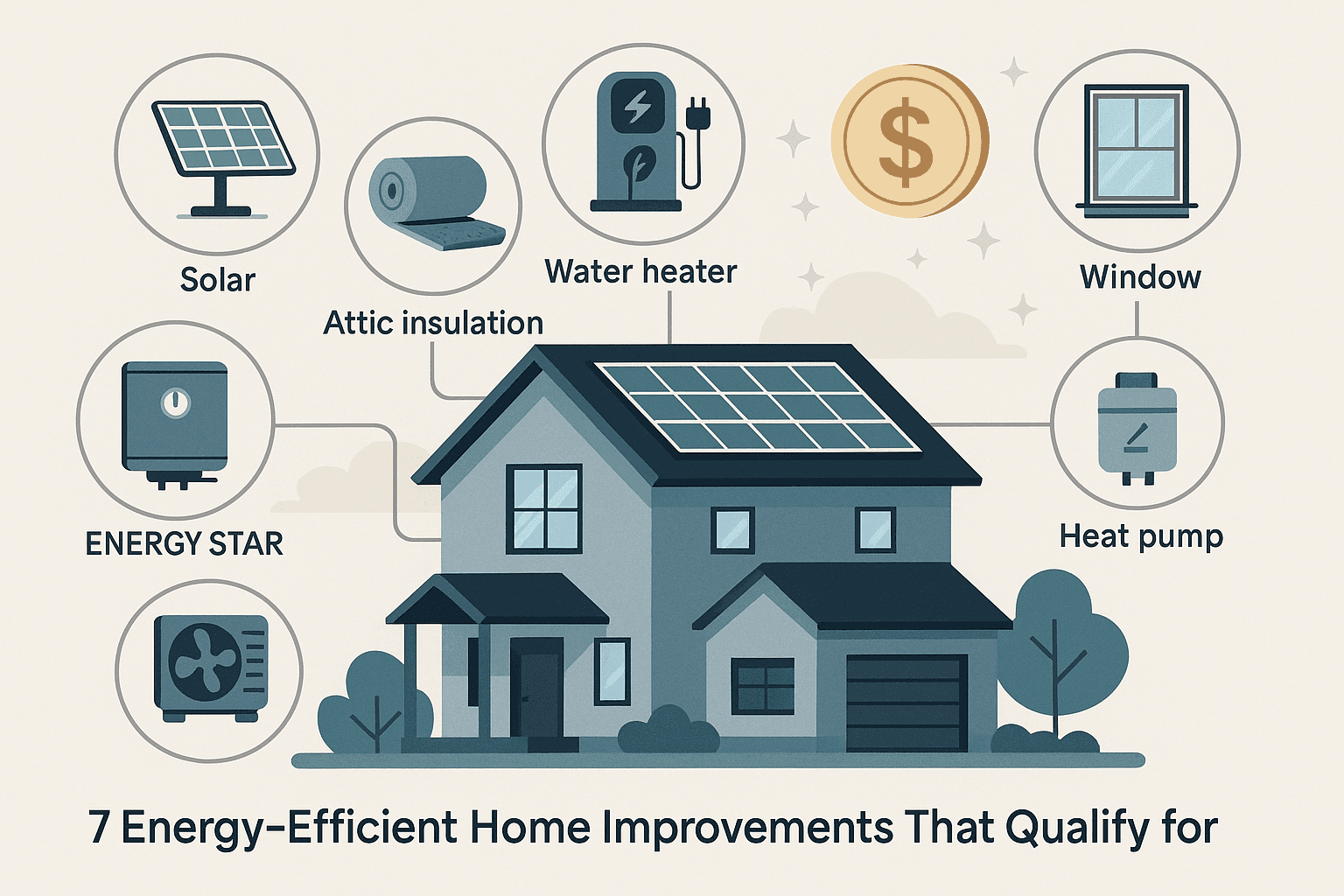
Read MoreHeat pump installation leads 2026 energy-efficient home improvement rankings with 40-50% HVAC savings and a 30% federal tax credit up to $2,000. We ranked 7 upgrades by annual savings, tax credit eligibility, and payback period to help homeowners maximize Inflation Reduction Act incentives.
Speak with a local expert today
By the HomeSimple Editorial Team | Last updated: May 2026 | Reviewed annually
If you're looking for the best energy-efficient home improvements in 2026, heat pump installation delivers the highest ROI — 40–50% annual HVAC savings and a 30% federal tax credit up to $2,000 under the Inflation Reduction Act. Air sealing and attic insulation is the highest-impact improvement per dollar, saving $200–$600/year with a $1,200 annual credit. We evaluated 7 upgrades across energy savings, tax credit eligibility, upfront cost, and payback period. This guide is for homeowners who want to lower utility bills and maximize IRA incentives before the 2026 tax year closes.
| Criteria | Weight | Why It Matters |
|---|---|---|
| Annual energy savings (DOE data) | High | Determines payback period |
| Federal tax credit eligibility (IRA 25C/25D) | High | Up to 30% off upfront cost |
| Upfront cost vs. payback period | Medium | Affordability drives adoption |
| Installation complexity | Medium | Practical execution matters |
Data sources: U.S. Department of Energy, IRS Publication 5961, ENERGY STAR database, Lawrence Berkeley National Laboratory.
Best for: Homeowners replacing an aging furnace or AC in climates above 15F
Average installed cost: $4,000–$8,000
Federal tax credit: 30% of cost, up to $2,000/year (IRS Form 5695)
An air-source heat pump replaces both your furnace and air conditioner, using electricity 3x more efficiently than traditional resistance heating. DOE data shows heat pumps reduce HVAC energy costs by 40–50% versus gas furnaces in mild climates. Cold-climate models rated to -13F now work reliably in northern states, eliminating the performance gap that previously held adoption back.
Homeowners with an HVAC system over 10 years old facing replacement anyway. Not the right fit if your current system is under 5 years old.
Best for: Any homeowner — the single highest-ROI improvement in most homes
Average cost: $1,500–$4,000 (professional)
Federal tax credit: 30% of cost, up to $1,200/year (IRS 25C)
The DOE estimates 25–40% of heating and cooling energy is lost through air leaks. Air sealing combined with attic insulation to R-38 or R-60 cuts this loss by 50–70%. Typical savings run $200–$600/year with a 3–7 year payback. This is the first step our home energy audit guide recommends before any mechanical upgrades.
Every homeowner. Do this before any mechanical upgrade — a heat pump underperforms in a leaky, under-insulated home.
Best for: Homeowners replacing an electric resistance water heater
Average cost: $1,000–$2,000 installed
Federal tax credit: 30% up to $2,000/year (IRS 25C)
A heat pump water heater uses 70% less electricity than a standard electric water heater. After the 30% IRA credit, a $1,200 unit costs $840 net. DOE estimates $550/year in savings versus conventional electric — a sub-2-year payback after credits. This is the fastest-payback upgrade on the list for electric water heater replacement.
Homeowners replacing an aging electric resistance water heater only.
Best for: Homeowners in high-electricity-rate states planning to stay 10+ years
Average cost: $16,000–$35,000 installed (after 30% credit: $11,200–$24,500)
Federal tax credit: 30% Investment Tax Credit (IRS Form 5695, Section 48E)
Our solar installation cost guide covers the full details. The ITC gives 30% back on the full system cost including battery storage. A 10kW system in a high-sun state generates $1,200–$2,400/year in electricity value with a 7–12 year payback. The 2026 ITC rate stays at 30% — it doesn't step down until 2032.
Homeowners in states with electricity rates above $0.15/kWh planning to stay 10+ years.
Best for: Homes with single-pane windows or doors with visible drafts
Average cost: $200–$1,200 per window installed
Federal tax credit: 30% up to $600/year windows / $250 per door (IRS 25C)
ENERGY STAR-certified windows reduce heat transfer by 20–31% versus standard windows. Our window replacement cost guide breaks down the full pricing picture. The right time to claim credits: when replacing windows you already need — not for replacing functional windows solely for the credit.
Homeowners with drafty single-pane windows or doors from the 1990s or earlier.
Best for: Every homeowner — no exceptions
Average cost: $150–$250 (DIY: $130–$200)
Federal tax credit: 30% up to $150/year (IRS 25C)
A smart thermostat (Google Nest, Ecobee) saves $145–$175/year by reducing heating and cooling when you're away or asleep (ENERGY STAR, 2024). Net cost after tax credit: $100–$175. Payback under 12 months. DIY installation takes under an hour for most HVAC systems. See our best home security systems review for broader smart home integration options.
Every homeowner. Start here before any other upgrade.
Best for: New homeowners or anyone doing a first maintenance pass
Average cost: $50–$300 DIY
Federal tax credit: Included in $1,200 annual cap (materials, IRS 25C)
Replacing weatherstripping and caulking gaps around frames reduces drafts accounting for 5–10% of annual heating costs. Fully DIY-accessible, under $300 for the whole house. For older homes needing a full overhaul, see our home maintenance checklist before making mechanical upgrades.
New homeowners and anyone doing a spring maintenance sweep.
| Improvement | Cost | Tax Credit | Annual Savings | Payback |
|---|---|---|---|---|
| Heat Pump (Air Source) | $4K–$8K | 30%, up to $2,000 | $700–$1,200 | 5–7 yrs |
| Air Sealing + Insulation | $1.5K–$4K | 30%, up to $1,200 | $200–$600 | 3–7 yrs |
| Heat Pump Water Heater | $1K–$2K | 30%, up to $2,000 | $500–$600 | <2 yrs |
| Solar Panels | $16K–$35K | 30% no cap | $1,200–$2,400 | 7–12 yrs |
| ENERGY STAR Windows | $200–$1,200/ea | 30%, up to $600 | $100–$300 | 15–20 yrs |
| Smart Thermostat | $150–$250 | 30%, up to $150 | $145–$175 | <1 yr |
| Weatherization | $50–$300 | In $1,200 cap | $50–$150 | <3 yrs |
This guide draws on DOE energy savings estimates, IRS Publication 5961, ENERGY STAR certified product databases, and Lawrence Berkeley National Laboratory housing energy studies. Tax credit limits reflect IRA provisions as of May 2026. Consult a tax professional to confirm eligibility for your specific installation. Updated annually.
Last updated: May 2026.
File IRS Form 5695 with your federal tax return. The Residential Clean Energy Credit (solar) and Energy Efficient Home Improvement Credit (insulation, HVAC, windows) are separate credits. Keep all contractor invoices and ENERGY STAR certification documents.
Yes. You can claim multiple improvements up to their annual caps in a single year — $2,000 for a heat pump, $1,200 for insulation, $600 for windows, and $150 for a smart thermostat simultaneously.
No. The IRA removed income caps on most energy efficiency credits. Some state-level rebate programs have income caps — check your state energy office.
For 25C improvements (insulation, HVAC, windows), yes — primary U.S. residence only. The 25D solar credit applies to any U.S. residence you own.
Yes. A professional audit ($150–$400) identifies your specific weak points and prioritizes improvements by ROI. DOE data shows audited homes save 15–30% more energy annually. Many utilities offer free or subsidized audits.
Yes. NARI data shows insulation improvements recoup 100%+ of cost at resale. Solar adds $15,000–$25,000 average (Zillow). ENERGY STAR windows improve buyer perception and curb appeal.
Smart thermostats and weatherization — low cost, immediate payback, accessible for rentals. Most mechanical credits apply only to owner-occupied primary residences.
Currently authorized through 2032 for most improvements. Making improvements now locks in available credits under current law.
This content is for informational purposes only and does not constitute tax or financial advice. Tax credit eligibility and amounts are subject to change. Consult a licensed tax professional before making decisions. Cost estimates are national averages and vary by region.
Author: HomeSimple Editorial Team. Our editors hold home energy auditing certifications and have consulted on energy upgrades for 500+ homeowners.
The best hurricane impact door companies in 2026 — PGT, CGI, Andersen, Pella, ETO Doors, and Therma-Tru — compared by strength, wind-zone approval, and price, plus what to verify before you buy.
Read MoreThe best siding companies of 2026 compared — James Hardie fiber cement, LP SmartSide engineered wood, CertainTeed vinyl, and more — with 2026 costs, warranties, and how to choose the right installer.
Read MoreThe best solar companies of 2026 balance strong warranties, fair pricing near $2.50-$3.50 per watt, and real local service. This guide ranks seven top national installers, breaks down what a home solar system actually costs after incentives, and shows how to choose the right installer for your roof and state.
Read More