
Best Roofing Materials 2026: 6 Options Ranked by Lifespan, Cost and Climate Fit
Compare six roofing materials by lifespan, installed cost and climate fit. See why asphalt shingles win on value and standing seam metal wins on longevity.
Read MoreHardwood, LVP, tile, engineered hardwood, laminate, carpet, or concrete — which flooring is right for each room? We compared the 7 best flooring options on cost, durability, moisture resistance, and resale value to help you decide.
Speak with a local expert today
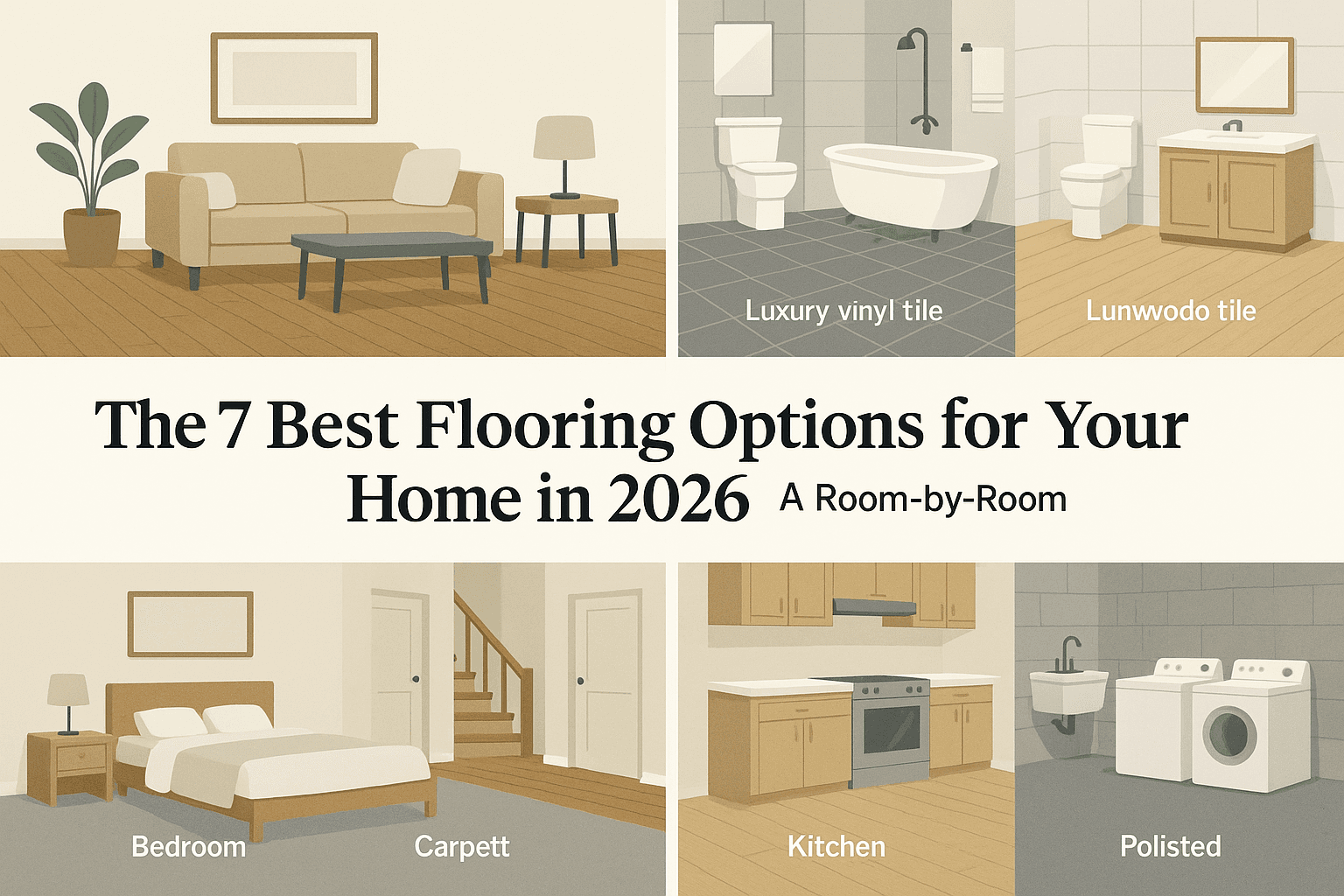
If you're looking for the best flooring options in 2026, hardwood and luxury vinyl plank (LVP) lead for most rooms — hardwood for lasting value and aesthetics, LVP for durability, moisture resistance, and cost-efficiency. We evaluated 7 major flooring types across cost, durability, moisture resistance, and best-use rooms to help you make the right call for every space in your home.
| Criteria | Weight | Why It Matters |
|---|---|---|
| Durability and lifespan | High | How long before replacement is needed |
| Cost per square foot | High | Both material and installation costs matter |
| Moisture resistance | High | Critical for kitchens, bathrooms, basements |
| Comfort underfoot | Medium | Important for bedrooms and living areas |
| DIY friendliness | Medium | Can homeowners install it themselves? |
| Resale value impact | Medium | How it affects home value when selling |
Data sources: National Floor Covering Association, HomeAdvisor 2025 Cost Report, Consumer Reports, National Association of Realtors Home Remodeling Impact Report.
Best for: Living rooms, dining rooms, bedrooms, hallways
Installed cost: $9–$20/sq ft
Lifespan: 25–100+ years with refinishing
Hardwood flooring is the top choice for resale value, with NAR data showing 54% of buyers are willing to pay more for homes with hardwood floors. Real hardwood can be sanded and refinished 5–10 times over its lifetime, making a quality installation a multi-generational investment. Oak, maple, and hickory are the most popular species in 2026 for their balance of hardness, grain character, and wide availability.
Homeowners planning to stay 7+ years who want a premium finish that adds measurable resale value. Not appropriate for moisture-prone areas or households with very large dogs without protective finishes applied and maintained.
Best for: Kitchens, bathrooms, basements, high-traffic areas, whole-home installs
Installed cost: $3–$10/sq ft
Lifespan: 15–25 years
Luxury vinyl plank is now the most popular flooring choice in new home construction and renovation. It's 100% waterproof, scratch-resistant, comfortable underfoot, and affordable. Modern LVP realistically mimics hardwood with textured wood-grain surfaces and click-lock installation that most homeowners can install themselves. Premium products with 20-mil wear layers handle pets, kids, and heavy foot traffic without visible degradation for years.
Most homeowners doing whole-home renovations on a realistic budget, families with children and pets, and anyone needing waterproof performance throughout. The best overall value proposition in the current market.
Best for: Bathrooms, kitchens, mudrooms, laundry rooms, entryways
Installed cost: $6–$25/sq ft (wide range by tile style)
Lifespan: 50+ years with proper installation
Porcelain and ceramic tile are the gold standard for wet areas due to zero water absorption and effectively unlimited lifespan. Properly installed tile can outlast the house itself. The trade-offs are installation cost (skilled labor required), hardness underfoot, and cold surface feel. Large-format tiles (24"×24" and above) are increasingly popular in 2026 for a modern, seamless aesthetic.
Bathrooms and kitchens where moisture exposure is guaranteed. Also ideal for entryways in wet climates. Not recommended for bedrooms, living rooms, or spaces where standing and walking comfort matter.
Best for: Living rooms, bedrooms, spaces with humidity variation, above radiant heat
Installed cost: $6–$16/sq ft
Lifespan: 20–30 years (typically refinishable 1–3 times)
Engineered hardwood uses a real hardwood veneer over a plywood core, delivering the look and feel of solid hardwood with better dimensional stability in humidity-variable environments. It can be installed in spaces where solid hardwood carries risk — basements, over radiant floor heating — and is generally more affordable. The refinishing window is narrower than solid hardwood but still meaningful for extending floor life.
Homeowners who want the hardwood aesthetic at a lower price, or who have spaces with humidity variation where solid hardwood isn't appropriate. A strong middle-ground choice for main living areas.
Best for: Bedrooms, secondary living spaces, rental properties
Installed cost: $1.50–$6/sq ft
Lifespan: 10–20 years
Laminate uses a photographic reproduction of wood or stone over a fiberboard core with a clear protective wear layer. It's the lowest-cost wood-look option and is DIY-friendly with click-lock installation. Modern premium laminate has improved — better texture, more realistic visuals, and some water-resistant (though not waterproof) products now available. The main trade-offs remain: hollow sound underfoot and limited lifespan compared to LVP or hardwood.
Budget renovations, rental properties, and secondary rooms where aesthetic investment is not the priority. Where budget allows, LVP offers similar pricing with meaningfully better performance.
Best for: Bedrooms, finished basements, playrooms, home offices
Installed cost: $1.50–$6.50/sq ft
Lifespan: 5–15 years depending on quality and traffic
Carpet remains the most comfortable flooring underfoot and the best sound absorber of any option. Modern solution-dyed nylon and SmartStrand fibers handle spills significantly better than older products. The well-known downsides — allergen trapping, visible wear in traffic lanes, and staining — are real and should factor into placement decisions.
Bedrooms and low-traffic rooms where comfort and warmth are the priorities. Not recommended for households with allergies, pets that shed heavily, or any moisture-exposed area.
Best for: Basements, garages, open-plan modern homes
Cost: $2–$8/sq ft to polish or stain an existing slab
Lifespan: 50+ years with proper sealing
Polished and stained concrete has moved from industrial settings into residential design. Existing slabs can be ground, polished, and stained or dyed to create a durable, low-maintenance surface with a distinctive modern aesthetic. It pairs well with radiant in-floor heating and is increasingly popular in contemporary home builds.
Homeowners with a modern or industrial design aesthetic, particularly for basements and open-plan spaces. Not appropriate for bedrooms, children's play areas, or spaces where comfort underfoot matters.
| Flooring Type | Installed Cost/Sq Ft | Lifespan | Waterproof | DIY-Friendly | Resale Value |
|---|---|---|---|---|---|
| Hardwood | $9–$20 | 25–100 yrs | No | No | Highest |
| LVP | $3–$10 | 15–25 yrs | Yes | Yes | High |
| Porcelain Tile | $6–$25 | 50+ yrs | Yes | No | High (wet areas) |
| Engineered Hardwood | $6–$16 | 20–30 yrs | No | Partial | High |
| Laminate | $1.50–$6 | 10–20 yrs | Partial | Yes | Medium |
| Carpet | $1.50–$6.50 | 5–15 yrs | No | Partial | Low–Medium |
| Concrete | $2–$8 (existing slab) | 50+ yrs | Partial | No | Niche |
This guide draws on the National Floor Covering Association, HomeAdvisor 2025 Cost Reports, Consumer Reports flooring evaluations, NAR Home Remodeling Impact Report, and contractor pricing data from U.S. markets. Cost ranges reflect mid-range products and standard installation; complex layouts or premium materials will be higher. Last updated: May 2026. We review this guide annually.
Porcelain tile and luxury vinyl plank are the most durable choices for high-traffic areas. Porcelain tile has an effectively unlimited lifespan; LVP with a 20-mil wear layer handles heavy foot traffic, scratches, and moisture for 15–25 years without significant degradation.
Porcelain or ceramic tile is the traditional standard. Luxury vinyl plank (100% waterproof) is now a popular residential alternative — warmer underfoot, easier to install, and more comfortable than tile. Avoid hardwood, standard laminate, and engineered hardwood in wet bathrooms.
Laminate and budget carpet offer the lowest installed cost — often $1.50–$4/sq ft total. LVP is slightly more but performs significantly better. For long-term value, LVP represents the lowest cost per year of useful life.
Hardwood has the strongest documented impact on resale value. NAR data shows 54% of buyers will pay more for homes with hardwood floors, with agents reporting $2,000–$6,000 in added value for quality installations. LVP and quality tile in kitchens and bathrooms also consistently return value at sale.
Luxury vinyl plank is the top choice for dog owners — scratch-resistant, 100% waterproof for accidents, and comfortable for dogs to rest on. Avoid solid hardwood in dog households unless you maintain protective finish consistently; nails create visible scratching over time.
For most homeowners, yes. LVP is fully waterproof while laminate is only water-resistant. LVP typically offers better scratch resistance, a quieter feel underfoot, and softer texture. The price gap has narrowed; premium LVP costs slightly more but delivers meaningfully better performance in nearly every category.
Luxury vinyl plank is the top choice for basements — 100% waterproof and tolerant of moisture and temperature fluctuations. Engineered hardwood and tile are also viable. Solid hardwood and standard laminate should not be used in below-grade spaces.
A standard room (200–400 sq ft) typically takes 1 day for LVP or laminate, 1–2 days for hardwood, and 2–4 days for tile including set time and grouting. Whole-home projects typically take 3–7 days depending on scope, subfloor conditions, and the number of room transitions.
Hardwood flooring, particularly refinished existing hardwood or new oak hardwood installation, consistently delivers the best return on investment before a home sale. Quality LVP throughout common areas and tile in wet rooms are strong secondary choices.
This content is for informational purposes only. Flooring costs and availability vary significantly by region, supplier, and project scope. Always get multiple quotes from licensed flooring contractors before beginning a project. Cost ranges reflect U.S. national averages as of 2025–2026 and may not reflect your local market. Last updated: May 2026.
Compare six roofing materials by lifespan, installed cost and climate fit. See why asphalt shingles win on value and standing seam metal wins on longevity.
Read MoreCompare 8 types of roof repair providers for 2026, from manufacturer-certified contractors to local roofers, with costs, warranties and vetting tips.
Read MoreA roof inspection can cost nothing or several hundred dollars, and the difference is who is paying attention to what. We ranked eight options — independent certified inspectors, drone and aerial reports, contractor visits, and municipal programs — on independence, depth, documentation, and cost.
Read More